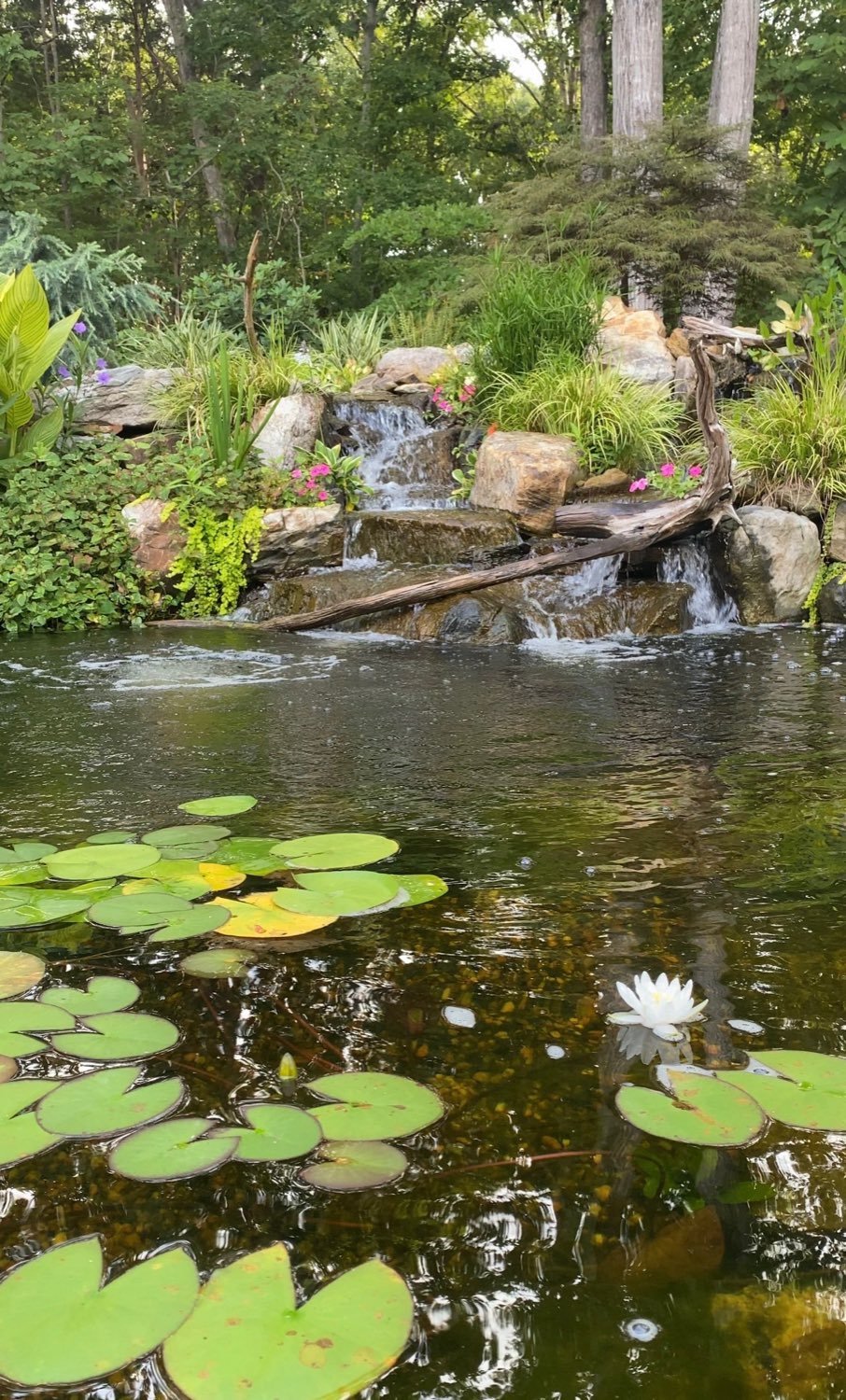
In this article, we will provide you with a crash course on aquatic plants for your pond.
Now, we will discuss the different types of aquatic plants available and where they should be planted. Let's jump right into it.
There Are 5 Categories of Aquatic Plants
Bog PlantsWater Depth: 0" Over the Crown
Bog plants tolerate moist soils, meaning their roots can remain wet. However, they cannot tolerate water covering the crown of the plant. They can be safely planted around the edges of ponds, in the very shallow areas of streams and waterfalls, or in a wetland or bog filter.
Examples of bog plants include Pink Rain Lily, Creeping Jenny, Arrowhead, Iris, Canna, Taro, Tropical Pitcher Plants, Marsh Marigold, and Forget-Me-Nots.
Marginal PlantsWater Depth: 0"–6" Over the Crown
Marginal plants can be planted in the shallower areas of a pond, usually around the perimeter. The roots and crown of these plants can tolerate being anywhere from 0 to 6 inches underwater. However, they do not tolerate being completely dry and may die if exposed to dry conditions for extended periods of time.
Examples of marginal plants include Dwarf Blue Bells, Cardinal Flower, Corkscrew Rush, Blue Rush, Water Hibiscus, Parrot's Feather, Taro, and Canna.
Deep Marginal PlantsWater Depth: 6"–16"
As the name suggests, deep marginal plants can be planted in deeper water than traditional marginal plants. These plants can safely be planted on the first shelf of your pond in water depths ranging from approximately 6 to 16 inches.
Examples of deep marginal plants include Pickerel Rush, Sweet Flag, Variegated Cattail, and Thalia Dealbata.
Emergent and Submerged PlantsOxygenator Plants
Some aquatic plants can tolerate having their roots and crown fully submerged in deeper water. These plants can safely be planted at the bottom of your pond.
Examples of emergent plants include Lotus and Water Lily.
Examples of oxygenator plants include Hornwort and Eelgrass. These plants can help contribute oxygen to the pond and support a healthy aquatic ecosystem.
Floating Plants
Floating plants are an interesting type of aquatic plant. These plants have roots, but their roots do not need to be planted in soil like many other aquatic plants. Instead, they freely float on the surface of the pond.
Examples of floating plants include Water Hyacinth, Water Lettuce, Frogbit, and Duckweed.
Important Tip to Remember
Always research the type of aquatic plant you are purchasing before introducing it into your pond. Some plant species can be invasive and may require routine maintenance or need to be planted in a container. Without proper management, certain plants can quickly spread and take over areas of your pond.
At White's Waterscapes, we understand that the right aquatic plants can do more than simply add color and beauty to a pond. Properly selected and strategically planted aquatic vegetation can help create a more natural-looking water feature and contribute to a balanced pond ecosystem.
If you are planning a new pond or looking to improve an existing water feature, choosing the right plants — and planting them at the correct depth — is an important part of creating a beautiful, healthy ecosystem pond.